Cat Jump: Cute Pet Music Game
NekoBeat Studio: Cozy Cats & Cute Music GamesMusic
4.218.00 Reviews
- Version
- 1.6.0
- Installs
- 1.00M
- Age Rating
- Everyone
Screenshots


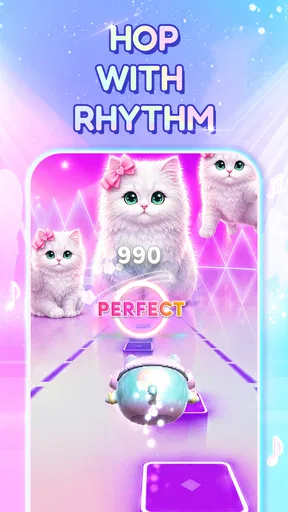


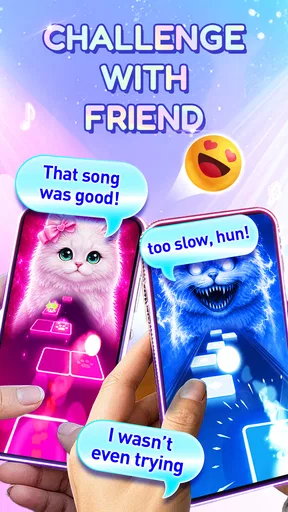


Our Review of Cat Jump: Cute Pet Music Game
 Analysis by Appyee
I approached Cat Jump: Cute Pet Music Game expecting a small, easygoing rhythm game, and that is exactly where it fits best. You guide a bouncing kitty ball across colored tiles while music drives the pace, then collect cute singing animals as you play. It is a simple idea, but the combination of bright visual cues, familiar musical timing, and collectible pets gives it more personality than a basic tap-to-score game.
This is a free music game from NekoBeat Studio: Cozy Cats & Cute Music Games, aimed at an Everyone audience. It has already passed one million installs and holds a 4.2 average from around one thousand ratings, which suggests that its friendly presentation and quick sessions appeal to a broad group of players. I would not mistake it for a deep rhythm simulator, though. Its strength is accessibility: I can open it for a short break, understand the objective almost immediately, and start playing without learning a complicated control scheme.
How the current version feels to play
I focus first on how a typical run builds a feel for the tile rhythm, then on the small habits that make repeat attempts more deliberate. I find it useful to separate learning the timing from chasing a collection goal, so each session has a clear purpose instead of becoming aimless repetition. That baseline also makes it easier to decide which settings are worth checking before settling into a routine.
A rhythm game built around one clear action
The core loop is deliberately narrow. The kitty ball moves from tile to tile, and my job is to keep the jumps aligned with the changing colors and the beat. That focus makes the game approachable for people who normally avoid rhythm titles. There is no need to memorize a large set of gestures or manage several buttons at once. I can concentrate on timing, watch the next tile, and react.
That simplicity also determines the game’s ceiling. Players who enjoy demanding chart patterns, detailed note lanes, or extensive performance statistics may find the experience lightweight. Cat Jump is less about mastering a complex musical instrument and more about maintaining a satisfying flow. The best moments come when the visual rhythm and the song feel synchronized enough that each landing seems natural rather than forced.
I found the color-based design especially useful during the first few sessions. Instead of asking me to decode a dense interface, the game gives me a visual target that is easy to recognize. This makes it suitable for a quick play while waiting for a bus or taking a short break between tasks. It also means that the display matters: playing in a distracting environment can make even a simple sequence harder to follow.
Why the animal collection matters
The singing animals are more than a decorative detail because they give the repeated runs a second purpose. If the only goal were to keep jumping, the experience could become routine quickly. Collecting cute characters adds a gentle sense of progress and gives me a reason to return after a short session.
I like this structure for casual play because it does not demand a long commitment. A player can enjoy the music and movement first, then treat the animal collection as an optional layer. That separation is important: someone who only wants a relaxing rhythm challenge can focus on the route, while a collector has an additional reason to replay familiar patterns.
There is a practical trade-off here. Collectibles can make repetition feel worthwhile, but they cannot replace variety forever. If you prefer games where every session introduces a major new mechanic, this one may feel too consistent. Its appeal depends on whether you enjoy polishing timing and gradually building a cute collection rather than constantly discovering new systems.
Music, attention, and everyday use
The musical format makes this game a natural fit for short, focused breaks. I can imagine playing it after finishing a work task, during a quiet coffee break, or while waiting for an appointment. The session structure feels more suitable for those moments than a long adventure game that requires remembering a story, a map, or a complicated objective.
One useful habit is to treat the first attempt on a song as a listening run instead of immediately chasing a perfect result. I watch how the tiles line up with the music, notice where my attention slips, and then try again with a clearer sense of the rhythm. That approach is more effective than tapping faster whenever I make a mistake. In a game based on timing, calm repetition usually helps more than frantic correction.
I would also recommend using headphones when the surroundings are noisy, provided that doing so is comfortable and safe. The visual tiles remain important, but hearing the beat can make the timing easier to anticipate. In a quiet room, the screen may be enough for a relaxed session; in a crowded place, the combination of visual and audio cues is more dependable.
Who will enjoy it most
This is a good match for players who like cute characters, light rhythm challenges, and games that can be understood within moments. Younger players may appreciate the friendly animal theme and straightforward goal, while adults may enjoy it as a low-pressure way to fill a few spare minutes. The Everyone rating reflects that broad, approachable presentation.
It is also a reasonable choice for someone trying music games for the first time. More technical alternatives can overwhelm new players with lanes, modifiers, long song lists, or demanding input patterns. Cat Jump offers a gentler entry point. I can learn its basic behavior through play rather than reading a lengthy tutorial.
On the other hand, I would skip it if my priority were deep competitive rhythm gameplay. Players who want precise difficulty curves, extensive customization, or a serious training environment should look toward a more specialized title. This game is at its best when I judge it as a cheerful casual experience, not as a replacement for a full rhythm platform.
What the latest release tells me
The current version is 1.6.0, while the game first appeared on September 10, 2025. That combination tells me I am looking at a relatively young product that has already moved beyond its initial release. I see the version number as evidence of ongoing refinement rather than proof of a particular feature, so I would keep expectations realistic: continued development is encouraging, but it does not automatically mean the game has become a large or technically complex experience.
The early evolution matters most for existing players. A player who installed it near launch may notice that the current build represents a more developed stage of the same basic concept. The central identity remains clear: colored tiles, a bouncing cat-themed character, music, and collectible animals. That continuity is helpful because returning players do not have to relearn an entirely different game after an update.
For a new player, the benefit is simpler. Starting with the current build means experiencing the version the developer is presently maintaining, rather than judging the game by its earliest form. I would still approach it as a compact casual title. Version progress can improve polish and stability, but it does not change the fact that the design is centered on a focused, repeatable loop.
How returning players should approach it
If I had played an earlier build, I would return by spending a few minutes checking the feel of the controls before trying to beat old results. Small changes in timing, presentation, or progression can affect muscle memory even when the main objective is unchanged. Treating the first run as a calibration session avoids blaming myself for mistakes caused by expecting the old rhythm.
I would also revisit the animal collection with a practical goal. Instead of trying to gather everything in one sitting, I would choose a short target and stop once the session begins to feel repetitive. This keeps the collection system motivating rather than turning it into a chore. The game works better as a series of small visits than as something I need to grind continuously.
Another useful approach is to separate “relaxing play” from “practice play.” During a relaxed session, I follow the music and accept imperfect runs. During practice, I pay attention to the exact moments where I lose the tile sequence and adjust my focus for the next attempt. Mixing these two mindsets can make a simple game feel more frustrating than it needs to be.
Where the experience still feels limited
The biggest limitation is the narrowness of the main interaction. Bouncing across colored tiles is immediately understandable, but the same clarity can become predictability for experienced players. If I want a game that constantly changes its rules, Cat Jump will probably not hold my attention as long as a larger rhythm or arcade title.
The collection layer helps, but it does not completely solve that issue. Cute animals provide a pleasant reason to continue, yet the game still depends heavily on whether the music and tile patterns remain satisfying over repeated attempts. This is a title I would keep alongside other games, not necessarily make my only music game.
There is also a concentration trade-off. The controls are simple, but rhythm timing still requires attention. I cannot play effectively while carrying on a conversation or switching repeatedly between apps. That makes it easy to learn but not entirely passive. Anyone looking for something that can run in the background without focus should choose a different kind of casual game.
The free price lowers the barrier to trying it, which I consider a real advantage for curious players. At the same time, free games can be judged quickly and harshly because players have many alternatives available. My advice is to give the core loop enough time to reveal whether its repetition suits you. A single rushed attempt in a noisy setting is not a fair test of a music game built around timing.
How it compares with familiar alternatives
Compared with traditional endless runners, this game places more emphasis on musical timing and color recognition than on avoiding obstacles through a constantly changing environment. An endless runner may feel more energetic and unpredictable, while Cat Jump feels more focused and easier to pick up. I prefer the latter when I want a compact challenge rather than a long reflex session.
Compared with full rhythm games, it is much less intimidating. There are fewer concepts to understand, and the cat-and-animal presentation softens the pressure of making mistakes. The trade-off is depth: a dedicated rhythm title is usually the better choice for players who want advanced patterns, demanding mastery, or a more serious sense of musical performance.
It also differs from collection-focused pet games. Here, the animals are tied to active play rather than being the entire experience. I cannot simply treat the app as a passive catalog of characters; I need to engage with the tile-jumping loop to make the collection meaningful. That connection gives the pets purpose, although players who want detailed pet care or simulation should look elsewhere.
Practical expectations before installing
The game requires Android 7.0 or later, so it is accessible on a wide range of devices that are not running the newest software. I would still keep expectations proportional to the hardware and display. Timing games are more enjoyable when the screen responds consistently, and an older device under heavy load may make any rhythm-focused experience feel less comfortable.
Because the game is free and rated Everyone, it is easy to recommend as a low-risk trial for families or casual players. I would let a child try the basic movement first and see whether the pace feels comfortable. The colorful style may attract younger users, but the need for focused timing means it is not automatically entertaining for every child.
For adults, the strongest use case is short-session entertainment. I would not install it expecting a long narrative, a complex strategy system, or a substitute for a playlist app. I would install it when I want music-related interaction with a clear objective and a softer tone than many competitive games offer.
What I would watch as development continues
Since the game is still relatively early in its life, I would watch how future updates handle variety without losing the clean controls. New musical experiences, more meaningful reasons to revisit collected animals, or improved ways to distinguish one run from another could extend its lifespan. The important point is balance: adding too many systems could weaken the immediate charm that makes the game approachable.
I would also pay attention to how well the developer supports returning players. A good update path should make the current experience feel smoother while preserving the familiar rhythm of tile jumping. Players who already enjoy the game will benefit most from additions that deepen replay value rather than simply making the interface busier.
For now, the current build gives me a clear picture of its identity. It is not trying to be an all-purpose music platform. It is a friendly, free game about keeping a cat-themed ball moving with the beat and collecting singing animals along the way. That focused purpose is both its strongest quality and its main boundary.
My recommendation
I recommend Cat Jump to anyone who wants a cute, uncomplicated music game for brief sessions. The controls are easy to grasp, the animal collection adds a reason to return, and the colorful tile path gives the music a visible structure. Its broad audience, free entry point, and accessible Android requirement make it particularly easy to try.
I would be more cautious with players who need deep rhythm mechanics or endless novelty. For them, a specialized rhythm game will likely provide more satisfying long-term mastery. But if your ideal mobile game is something you can open between everyday tasks, play with concentration for a few minutes, and leave without losing track of a complicated story, this one fits that routine well.
My final view is positive but measured: the game succeeds because it keeps its promise small and clear. It turns a bouncing cat, colored tiles, music, and collectible animals into a pleasant casual loop. I would keep it installed as a light break-time game, while remembering that its charm comes from simplicity rather than depth.
Verdict
Strengths of Cat Jump: Cute Pet Music Game
- Simple one-touch controls are easy for children and casual players.
- Bright cat animations make each jump feel cheerful and entertaining.
- Short rounds work well for quick play sessions on the go.
- Music and sound effects add energy to the jumping challenges.
- Unlockable cats give players a small goal beyond reaching high scores.
Limitations of Cat Jump: Cute Pet Music Game
- Gameplay can feel repetitive after several similar jumping runs.
- Timing mistakes may become frustrating as platforms move faster.
- Frequent retries may encourage a grind for better scores.
- Some content or rewards may depend on ads or in-app purchases.
- Small visual details can be difficult to see on compact screens.
Other Releases by NekoBeat Studio: Cozy Cats & Cute Music Games
View All
Piano Tap: Rush Song Game
Music4.7
Similar Picks in This Category
View All
Tiles Hop Music & Ball Game
AMANOTES PTE. LTD.4.3

Magic Tiles 3™ - Piano Game
AMANOTES PTE. LTD.4.6

Real Piano
Bilkon3.7

Piano Game: Classic Music Song
Dream Tiles Piano Game Studio4.0

Smash Colors: Music Ball Rush
BADSNOWBALL HONGKONG LIMITED4.2

Piano Music Go-EDM Piano Games
Joy Journey Music Games4.5
Frequently Asked Questions
What is Cat Jump: Cute Pet Music Game?
Cat Jump: Cute Pet Music Game is a casual rhythm and arcade title in which you guide an adorable cat through music-driven levels. The main challenge is to tap or react at the right moments while the character jumps, avoids obstacles, and follows the beat. Its colorful presentation, short stages, and simple controls make it suitable for quick sessions and younger players, although timing becomes more demanding as you progress.
How do you play Cat Jump: Cute Pet Music Game?
Gameplay is designed to be easy to understand, even for players who do not usually play rhythm games. You generally tap the screen in time with the music to help the cat jump, move, or land safely on platforms. Success depends on learning each song’s rhythm, watching upcoming hazards, and maintaining concentration. The controls are simple, but completing later stages may require practice and accurate timing.
Is Cat Jump: Cute Pet Music Game free to download and play?
The game can generally be downloaded without an upfront purchase, allowing players to try its core gameplay for free. However, free mobile games may include advertising, optional purchases, or unlockable content that can affect the experience. Before downloading, it is worth checking the current store listing for details about in-app purchases, paid items, and whether certain cats, songs, or features require additional payment.
Does Cat Jump: Cute Pet Music Game work offline?
Some basic gameplay may be available without a continuous internet connection, which is useful when traveling or playing with limited mobile data. Nevertheless, an internet connection may be needed for advertisements, updates, cloud-related features, online events, or restoring purchases. Offline availability can also vary between versions and devices, so you should test the game after installation rather than assuming every feature will work without internet access.
Is Cat Jump: Cute Pet Music Game suitable for children?
The cute animal theme, bright visuals, and straightforward controls make Cat Jump: Cute Pet Music Game appealing to children and casual players. Even so, parents should review the game’s age rating and privacy information because advertising, optional purchases, or external links may be included. Younger children might also need help with difficult rhythm sections and should use device purchase restrictions to prevent accidental transactions.
Play our best games!


